
Allocating your Amazon DSP advertising budget is crucial for maximizing return on investment. However, many people struggle with how to allocate a limited budget effectively. This article is especially helpful for those who are concerned about “over-reliance on certain campaigns” or “not knowing how to adjust their budget effectively.” We will clearly explain the tips for efficiently designing your Amazon DSP budget allocation. This article is easy to understand for beginners and will be useful for marketers in small and medium-sized businesses as well as those managing large-scale campaigns.
What are the basics of Amazon DSP budget allocation?
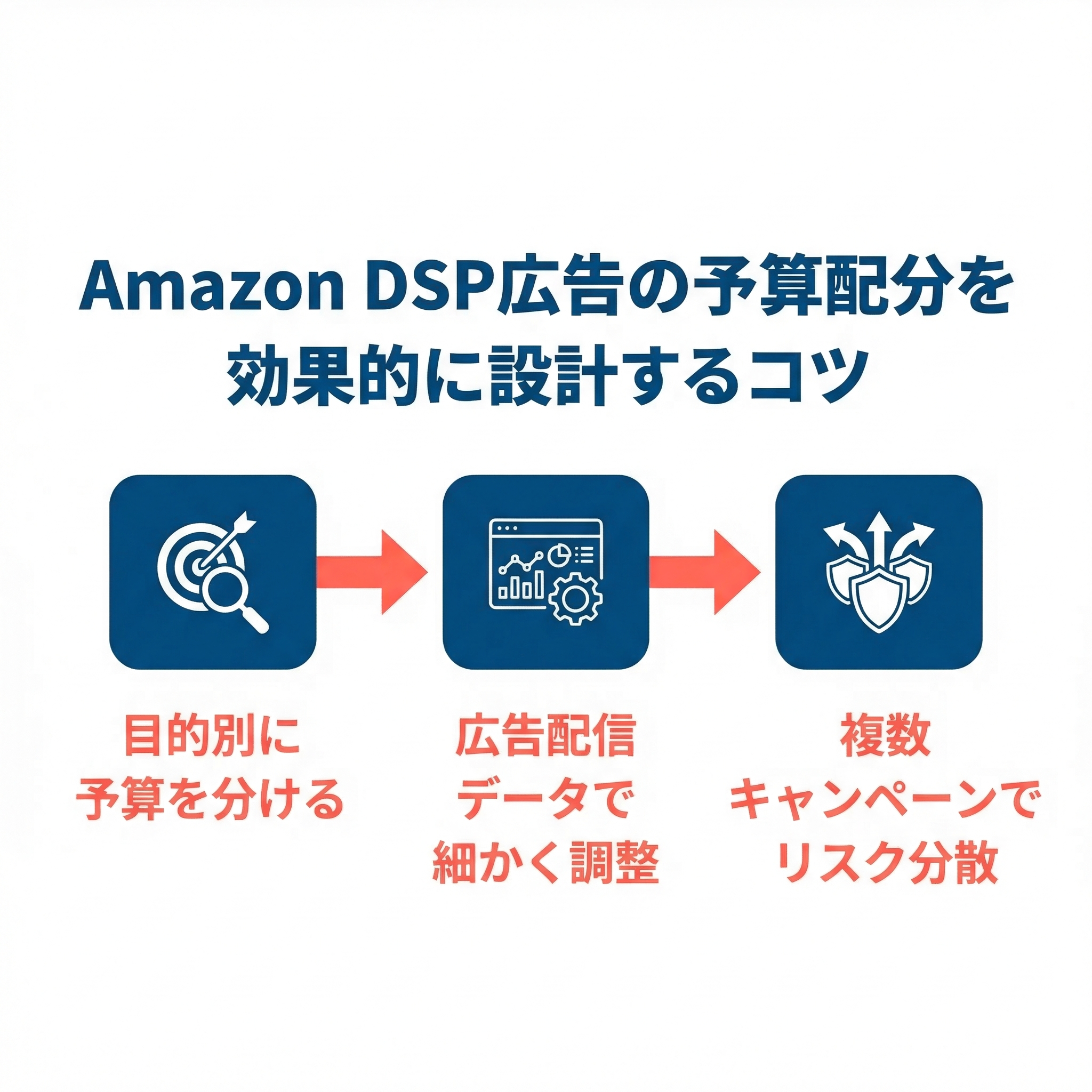
Amazon DSP budget allocation involves deciding “how much budget to allocate to each campaign,” but what’s important here is “budget segmentation according to the campaign’s objectives” and “continuous improvement based on data.”
Specifically, the following three points are the basics.
- Allocate the budget according to objective (e.g., brand awareness, retargeting, conversion acceleration).
- Fine-tune based on ad delivery data.
- Diversify risk through multiple campaigns.
By keeping these three points in mind, you can reduce waste and operate more efficiently.
Common budget allocation failures and their causes
Here are some common mistakes that many advertising professionals experience:
- Focusing too much budget on a particular target group can lead to stagnant overall sales.
- The budget allocation criteria are vague, making it difficult to measure effectiveness.
- Unable to grasp the variability in advertising effectiveness, it is impossible to make decisions regarding reallocation.
These failures stem from a lack of planning and insufficient data analysis. In particular, focusing on certain campaigns simply because they are “working” increases the risk of overlooking other potential benefits.
For Beginners: Basic Points of Amazon DSP Budget Allocation
If you’re using Amazon DSP for the first time, make sure you understand the following points.
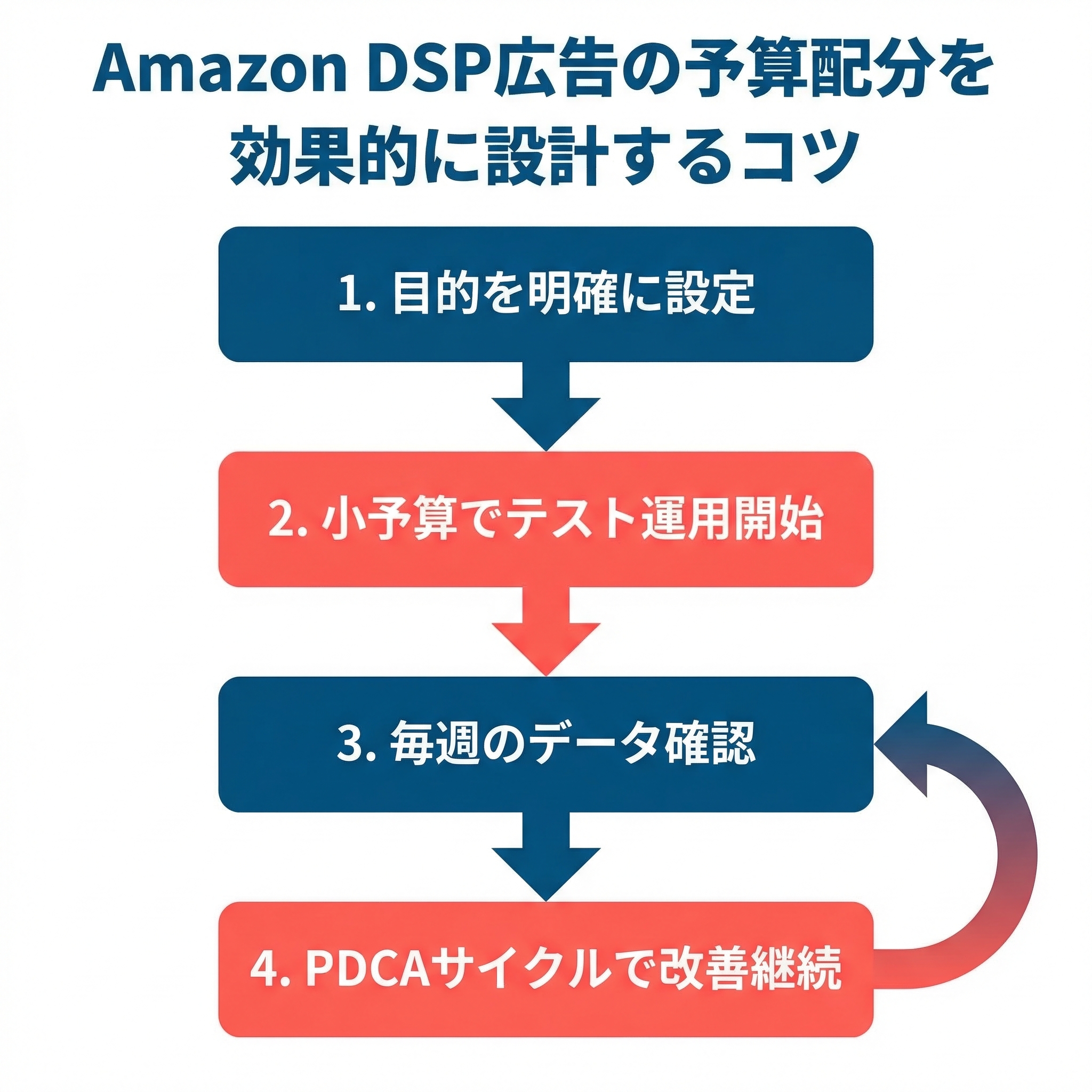
- Clearly define the campaign’s objectives and
allocate the budget according to those objectives, such as increasing awareness, generating interest, and promoting purchases. - Initially, we conduct test runs with a small budget,
identifying and adjusting the most effective targets and creative elements along the way. - Every week, we review ad delivery data and
compare multiple metrics such as impressions, click-through rates, and conversion rates. - The PDCA cycle—
Plan → Do → Check → Act—is repeated to improve accuracy.
Efficient budget allocation techniques for small and medium-sized enterprises
For small and medium-sized enterprises aiming for maximum results with a limited budget, the following efficiency techniques are recommended.
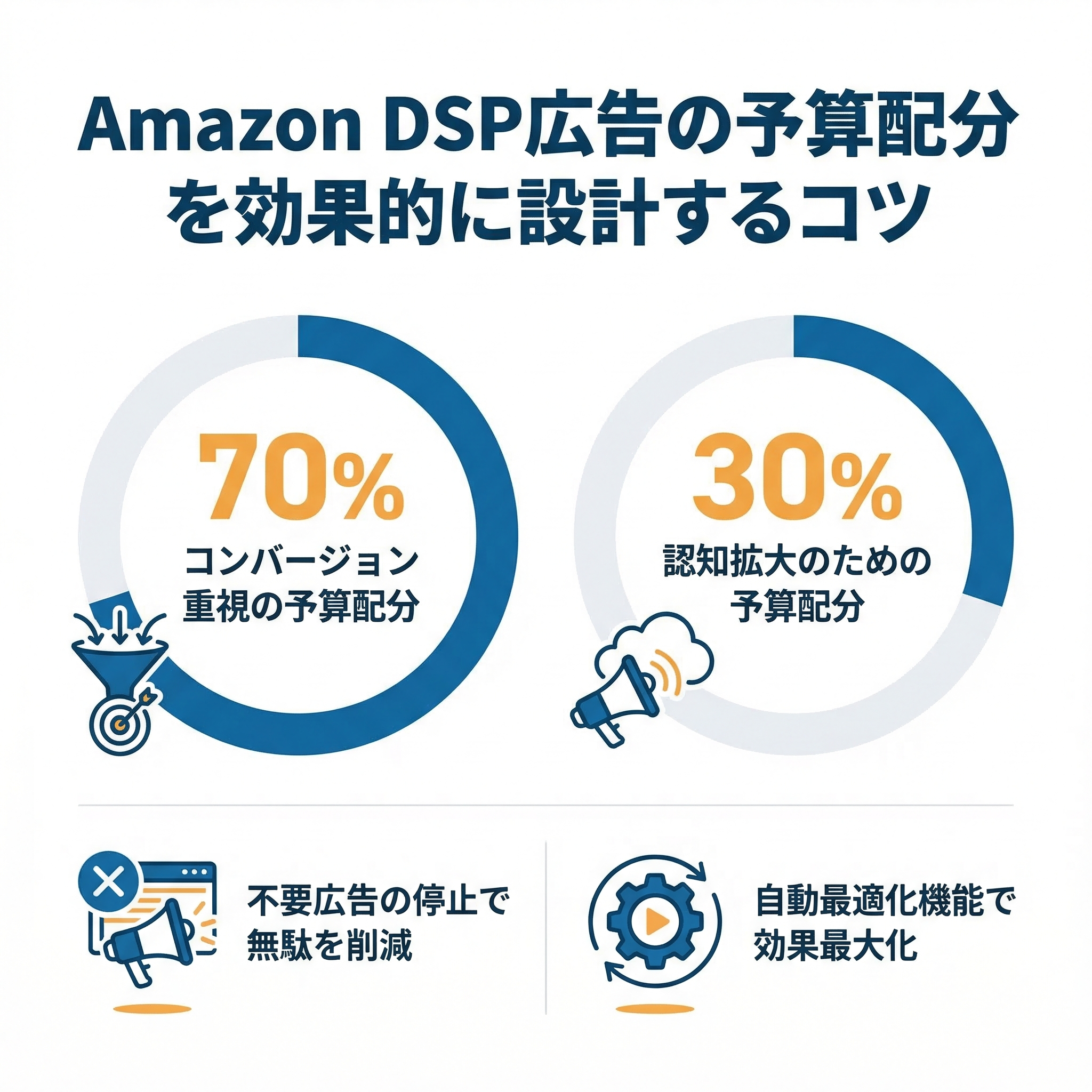
- By allocating 70% of the budget to campaigns that directly lead to conversions,
we can increase ROI by focusing on strategies that are likely to directly contribute to sales. - The remaining 30% will be allocated to acquiring new customers and increasing brand awareness, thereby cultivating a future customer base.
- Regularly stop low-cost-performance ads and reallocate the budget to high-performing campaigns.
- By utilizing tools and automatic optimization features, the effort required for fine-tuning can be reduced.
Tips for budget management in large-scale campaigns
| point | Content | merit |
|---|---|---|
| 1. Set clear goals for each campaign. | Set budgets by dividing them into objectives such as sales, brand awareness, and acquiring repeat customers. | Easier to measure effectiveness |
| 2. Subdivision of budget allocation | Allocate the budget in detail by product category, region, and time of day. | Efficient targeting is possible. |
| 3. Risk diversification | Distribute the funds across multiple initiatives, rather than focusing on just a few campaigns. | Mitigating the risk of unexpected performance reductions |
| 4. Regular data analysis and reporting | Analyze the effects weekly or monthly and share progress with stakeholders. | Increased transparency makes it easier to formulate improvement measures. |
Close information sharing within the organization, along with meticulous adjustments, is key to success.
A must-read for all fund managers! Common techniques for optimizing budget allocation.
Here are three budget allocation optimization techniques that will be useful for operators of all sizes.
- 1. Thoroughly implement the PDCA cycle:
Plan → Do → Evaluate → Improve, and strive for data-driven operations rather than trial and error. - 2. Clearly define budget allocations according to campaign objectives.
Do not mix measures with different objectives; allocate appropriate budgets to each. - 3. It is important to make fine adjustments using advertising delivery data,
invest additional resources in measures that have a good risk diversification effect, and review less effective measures early on.
How to review your current budget allocation with a free check.
Even if you don’t have much time to spare in your busy daily life, there’s a way to review your current budget allocation for free.
- Utilize the reporting function in the ad management screen.
- Use free analysis tools
- Request a diagnostic service from an external expert.
External diagnostics, in particular, can sometimes be requested for a cost of around tens of thousands to 100,000 yen (※This is an estimate). Receiving advice from a specialist’s perspective can lead to efficient and effective improvement plans.
summary
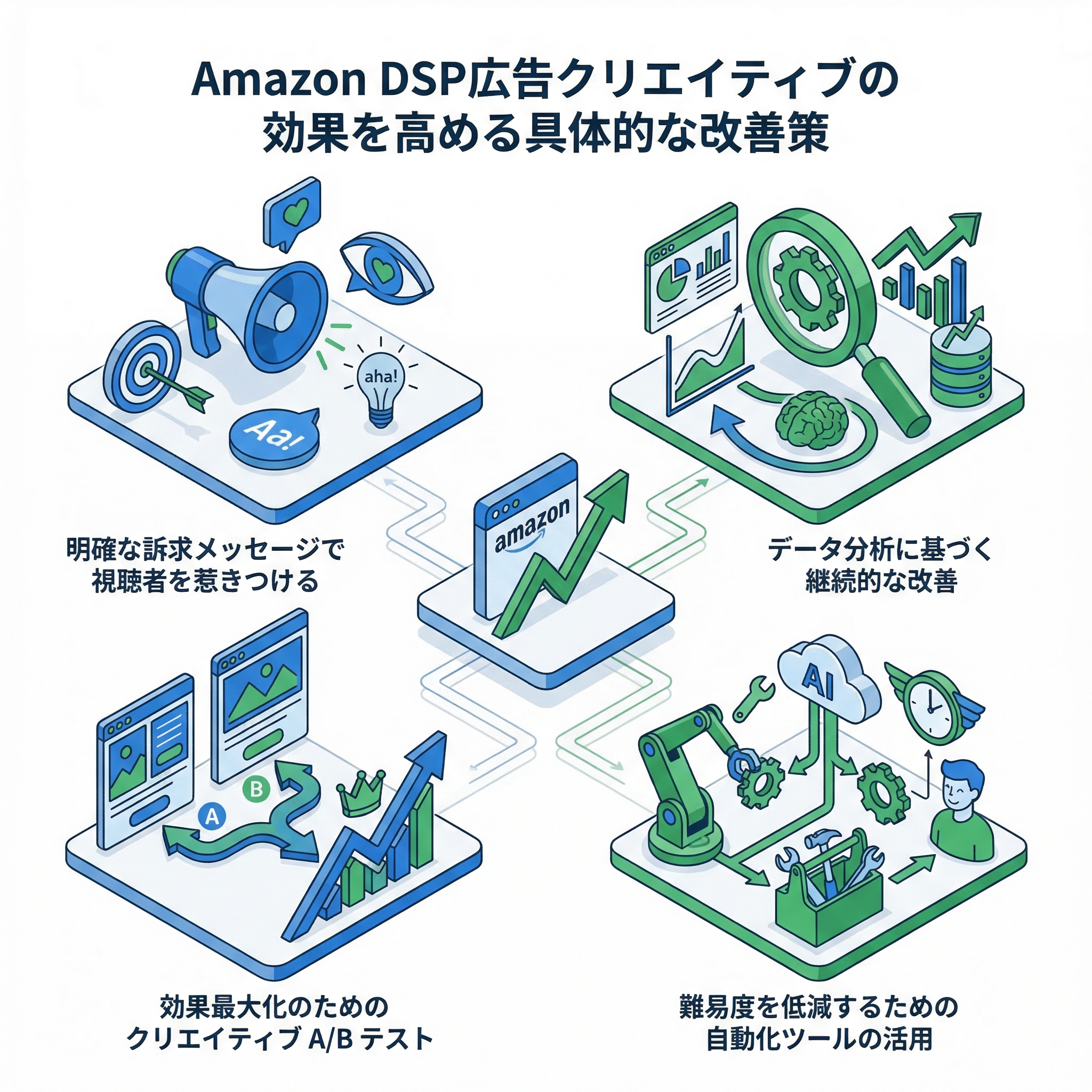
To optimize your Amazon DSP advertising budget, it’s essential to clearly define your campaign objectives, continuously implement a data-driven PDCA cycle, and allocate funds with risk diversification in mind. Start with small-scale test runs and make frequent adjustments based on the data to reduce wasted advertising costs and steadily improve results. Even when you’re busy, try to improve step by step by utilizing tools and external resources. As you gain confidence in budget allocation, your anxieties will decrease, leading to better results.
▼Click here for the next step!
- Amazon DSP Ad Optimization Guide
- Free budget allocation diagnostic service
- Support for implementing effectiveness measurement tools
■ Recommended links in the side content:
- A Complete Guide to the Basics of Amazon DSP Advertising
- Key points for effective targeting settings
- Metrics and interpretations for measuring advertising effectiveness
- How to improve advertising operations using the PDCA cycle
















コメント